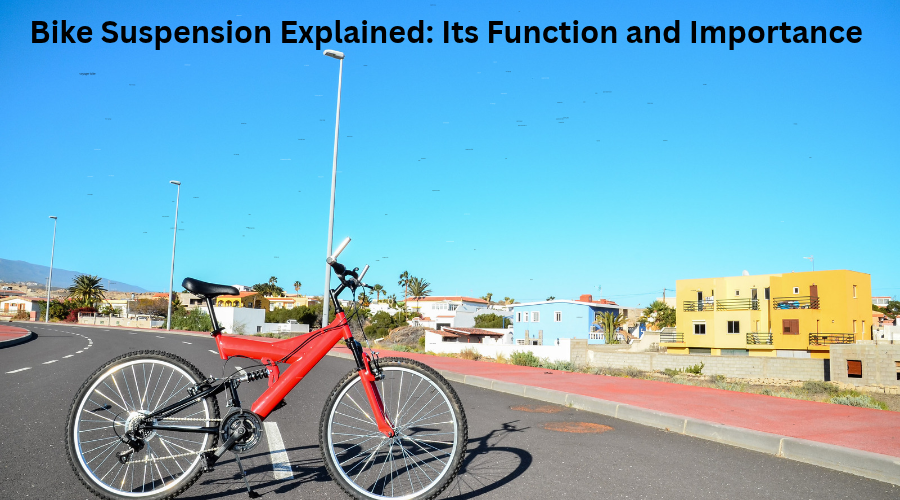
When your bike can’t absorb the constant hits, riding on rocky trails, tree roots and uneven ground quickly becomes unpleasant. On longer rides you may find your front wheel hopping over obstacles, your hands tiring on long descents or your rear wheel sliding on loose surfaces. These issues are usually related to the way your bike’s suspension deals with the terrain.
Bike suspension does more than make your ride comfortable. It helps preserve tyre condition with the ground which improves handling and gives you better control when navigating unpredictable trail conditions. However, simply having a suspension fork or rear shock does not guarantee better performance. You also need to understand how the suspension system works and how to adjust it according to your riding style.
So, whether you ride a hardtail or a full-suspension mountain bike, understanding suspension mechanics can help you make better equipment choices and get more out of every trail session.
Bike suspension is a system designed to absorb impacts and reduce vibrations when the wheels roll on uneven surfaces. It makes the wheels capable to move in response to ground obstacles while limiting how much shock transfers to the frame and your body.
Most mountain bikes use one of two suspension configurations.
A hardtail mountain bike has a front damping system but no rear shock. Its rigid rear frame offers direct pedaling efficiency and relatively simple maintenance, making it suitable for cross-country riding and less technical trails.
A full-suspension mountain bike is fitted with both a shock absorbing front fork and a rear shock. This configuration helps absorb impacts at both end. The result is much better riding comfort with more better bike control on rough terrain.
Regardless of the configuration, suspension systems generally rely on three components for functionality namely, a spring, a damper, and a supporting chassis. The spring absorbs impact energy. The damper controls suspension movement, and the chassis guides and supports the components.
But how do these parts work together when you encounter an obstacle?
Understanding the suspension process becomes easier when you break it down into individual stages.
Impact. Your front or rear wheel encounters an obstacle, such as a rock or tree root. The force pushes the wheel upward.
Compression. The suspension compresses as the wheel responds to the impact. Its spring absorbs some of the energy by storing it temporarily.
Energy absorption. The damper regulates how quickly the suspension compresses. This helps absorb the force of impact transferred through the bike.
Rebound. Once the wheel passes the obstacle, the compressed spring pushes the suspension back toward its original position.
Damping control. The damper regulates this return movement thus preventing excessive bouncing and helping the tire maintain contact with the trail.
So, suspension is not simply about absorbing a bump and returning to its original position. It manages the entire movement cycle to keep your bike stable and predictable.
Your suspension performance depends on how its individual components work together. Understanding their functions also helps you identify which adjustments can improve your riding experience.
The spring is the main component for absorbing impact. Mountain bike suspension generally uses two spring types: air and coil.
Air springs use compressed air to deliver resistance against suspension movement. As a bike owner you can adjust the air pressure using a shock pump. This makes air springs adapt to different rider weights and preferences. Air springs are generally lighter and offer convenient adjustability.
Coil springs use a metal spring to absorb shocks and bumps. These are known for their reliable performance and sensitivity to smaller bumps. However, the ride stiffness cannot be adjusted as easily as changing the air pressure. Instead the whole spring is replaced with one having a different rating.
Your choice of spring type depends on what kind of ride quality you want. Air springs offer flexibility and weight savings. Coil springs on the other hand appeals to riders who want uniform sensitivity and a unique suspension feel.
A spring singlehandedly cannot control how quickly suspension compresses or extends. Here the role of the damper becomes important.
Most mountain bike dampers use hydraulic fluid and internal valves to regulate suspension movement. As the suspension moves, oil passes through controlled openings, creating resistance.
Without adequate damping, your bike may bounce repeatedly after hitting an obstacle. So, the damper plays a crucial role in keeping suspension movement controlled.
The suspension chassis houses and supports the moving components. In a front fork suspension system, this includes the stanchions, lowers, and associated internal mechanisms.
Suspension travel is another vital measure of efficiency of suspension in a bike. It is the maximum distance the suspension can compress from its fully extended position. More travel allows the bike to absorb larger impacts. There is no fixed limit of suspension travel, it totally varies from one bike model to another. This is because it depends on the bike design and the type of terrain the bike is meant for.
How Mountain Bike Suspension Dampers Work: Controlling Compression and Rebound
Your suspension has to react to bumps, but not be too soft, too harsh, or too unstable. Adjustments to the damping help you find that balance.
Compression Damping is a measure of how reactive the suspension system is. That’s pretty much how fast your suspension compresses when the wheel hits a bump. This changes how much resistance the suspension has when hitting bumps and braking.
Rebound damping is also a measure of responsiveness. It shows how quickly the suspension extends after compression. Rebound damping prevents the spring from pushing the suspension back too aggressively. This is the main reason for excessive bounce during a ride.
If you visualise riding over a series of closely spaced rocks. If your rebound is too fast, the bike may bounce excessively between impacts. If it is too slow, the suspension will not extend sufficiently before reaching the next obstacle.
Most modern mountain bike dampers are fitted with hydraulic circuits to control compression and rebound encountered by suspension.
During compression, hydraulic fluid passes through valves to regulate resistance as the suspension shortens. During rebound, fluid moves through a separate controlled circuit as the suspension extends after impact.
Many suspension systems also have low and high speed compression adjustments. The low-speed compression generally reacts to slower suspension shaft movements such as weight shifts, pedaling, and braking. High-speed compression reacts to quicker shaft movements from sharp impacts, like hitting a rock or landing from a jump.
To sum up, these adjustments help you fine-tune suspension behavior for different trail conditions.
Suspension sag refers to how much your suspension compresses under your weight when you sit or stand on the bike in your normal riding position, wearing your usual riding equipment.
It is generally expressed as a percentage of the suspension's total travel.
For example, if your suspension has 150 mm of travel and compresses 30 mm under your weight, the sag is 20%.
Why does this matter?
Your suspension needs enough room to compress further when you encounter obstacles, but it also needs enough available extension to respond to dips and changes in terrain.
Excessive sag can make your bike sit too low, reducing available compression travel and potentially affecting ground clearance. Insufficient sag can make the suspension feel too firm and reduce its ability to respond to smaller bumps.
Suspension has a direct impact on how your bike responds to different terrains. The benefits of a good suspension become obvious when you ride technical trails, or spend extended periods riding on steep downhills.
A properly functioning suspension system helps the wheels follow uneven terrain rather than transferring every impact directly to the frame.
This improves your ability to maintain traction when cornering and navigating rough sections.
Suspension also supports more consistent braking. During riding, when you apply the brakes on an uneven descent, the suspension helps the tires follow the terrain path while balancing the forces acting on the bike.
The real advantage is that properly adjusted suspension helps you maintain better control while your tires deal with unpredictable surfaces.
Repeated impacts while riding for extended distances on an uneven surface takes it toll on the body. The hands, wrists, and forearms experiences quite a lot of strain. This usually felt during long descents when you continuously grip the handlebars to maintain control.
Front suspension helps absorb some of these impacts before they reach your arms.
By reducing repeated vibrations and sudden shocks, a good suspension limits excessive strain on your hands and forearms. This may also help you maintain a more relaxed grip rather than constantly tightening your hands to compensate for rough terrain.
Arm pump is another type of physical train that occurs during long rides. In this, the forearm muscles become fatigued during prolonged riding. To prevent this appropriate damping and spring adjustments helps reduce unnecessary impact-related fatigue.
So, if your hands feel exhausted after every technical descent, examine your suspension setup to improve ride comfort.
Having quality suspension components is only part of the equation. Incorrect settings can affect your bike's ground clearance, and handling also.
For example, excessive sag can lower your bike's riding height. This reduces ground clearance and increases the likelihood of pedal strikes when you ride over rocks, roots, and other obstacles.
Incorrect rebound damping creates another problem. If the suspension extends too quickly, your bike may bounce and become difficult to control. If it extends too slowly, it may gradually lose available travel over consecutive impacts. This is commonly called suspension packing.
Similarly, inadequate compression support can contribute to excessive suspension movement and frequent bottom-outs, particularly when landing from drops or encountering larger obstacles.
You do not need to make complicated adjustments to establish a good suspension setup. Start with the manufacturer's recommendations and work through the basic settings.
First, check the recommended air pressure or coil spring specifications for your bike and rider weight. Next, measure sag while wearing your usual riding equipment and standing or sitting in your normal riding position.
Adjust rebound damping according to the manufacturer's starting recommendations. Keep compression settings close to the recommended baseline.
Take your bike onto a familiar trail and observe how it responds to repeated impacts, braking, and cornering. Make small adjustments rather than changing several settings simultaneously.
Finally, use an appropriate shock pump for air-sprung suspension and follow manufacturer instructions for maintenance and servicing.
Bike suspension is a crucial feature for a bike. Without this the bike is not complete. It influences nearly everything from traction to braking control, handling, and even rider fatigue. But owning a bike with advanced suspension components does not automatically guarantee better performance. You need to understand how the suspension components work together. Start with the correct setup, maintain your components, and make adjustments according to your riding conditions. A properly tuned suspension system helps you ride with greater control and confidence.
When your bike can’t absorb the constant hits, riding on rocky trails, tree roots and uneven ground quickly bec...
READ FULLFolding or electric folding bikes are a modern version of standard bicy...
READ FULLSummary Voyager bikes do not need gasoline, which is the biggest factor; they are budget-friendly bik...
READ FULL