Speed and open roads have always been associated with road cycling. However, another alternative has recently been introduced into the discussion: the electric road bike. It is also known as an e-road bike, with a small motor that provides the rider with an additional push when required. This has left many cyclist with a question as to whether to continue using their traditional road bike or make the change.
Each has its advantages. Both have their restrictions. The right decision depends on who you are and your expectations from cycling. This article simplifies it all so that you can make a decision.
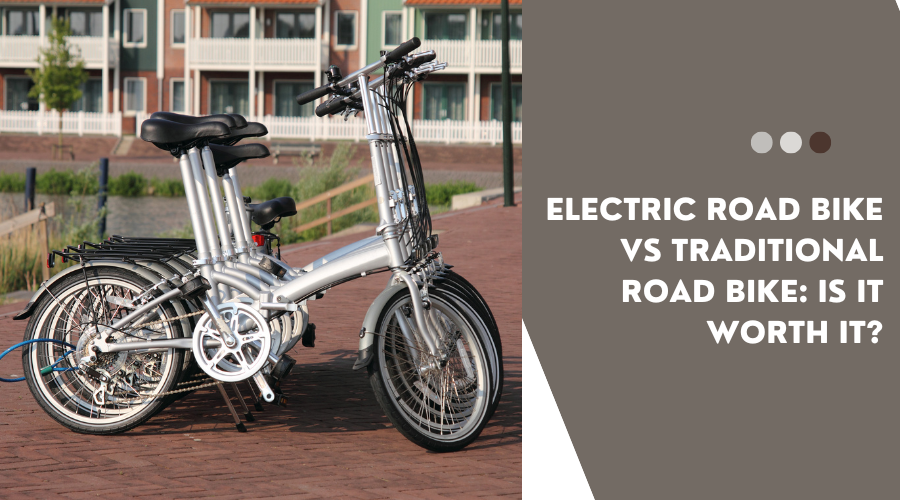
An electric road bike closely resembles a traditional one. It is similar to drop handlebars, a light frame, and narrow tires. The major distinction is that a small electric motor and a battery are created in the frame. It offers what is referred to as pedal assist: it kicks in only when you are pedaling, and the degree to which it assists you depends on how hard you push it.
The electric road bikes have varied assist levels. You may decide the level of assistance you desire for the motor. And on level roads, you may not have assistance at all. It can be slowed to a steep climb, and the motor can relieve some of the load. The battery typically fits inside the frame, hence at first sight the bike does not present itself as too different in appearance from other road bikes.
A traditional road bike is completely human-powered. Nothing like no motor, no battery, or no electronics. The only things there are the rider, the pedals, and the road. The cost of these bikes is usually lower than that of electric bikes because they do not include the motor or battery. They are engineered to be fast and efficient, and they have been sourced out to be so over many decades.
Traditional road bicycles are used by competitive cyclists who value the raw experience of cycling. Every climb is earned. All the kilometers covered are the rider's efforts. To several individuals, this is the sole purpose of road cycling. The physical challenge is not an advantageous aspect; it is the objective.
Weight is the difference between the two bikes. An average road bike with good quality is weighted at a range between 7 and 9 kilograms. The battery and the motor increase the weight of an e-road bike by between 11 and 14 kilograms. That is a pretty difference in particular right on climbs or when transporting the bike.
To a casual rider or commuter, the additional weight of an electric road bike can hardly be felt during a ride. It is easily compensated for by the motor assist. However, for the competitive cyclist or long-distance rider who rides in hilly terrain, the weight disparity means something. A lightweight bike is simpler to manage on difficult descents and will move faster. This has become one area where the traditional road bike clearly shows an upper hand.
The two bikes work efficiently on flat terrain. A conventional road bike can achieve and sustain high speeds with less effort from a fit rider. The electric road bike can also reach that speed, and the motor can maintain it if energy levels decrease. The performance difference when flat roads are utilized is not too significant to most recreational riders.
An electric road bike plays a major role. Mountains that would make a normal road bike rider feel so exhausted would now be very easy to handle with the help of the pedal. The electric option appeals to riders in hilly areas or those covering longer distances without fatigue. It eliminates the fear of difficult ascents on climbs and enables more individuals to enjoy long-distance road cycling.
The traditional road bike is more advantageous on downhills. It is also lighter and nimbler, and can be handled at speeds. An electric road bike may be slightly less responsive when traveling downhill due to the added weight. This is not much of a problem to the average rider, but a competitive or regular rider will note the difference.
The most common factor among cyclists is cost. Conventional road bikes come in a range of prices. The prices of a good entry-level road bike are between hundreds and thousands of dollars. Companies with competitive cyclists sell high-end models that are much more expensive.
Electric road bikes are costlier in general. A good e-road bike may cost as little as two thousand dollars, and it may be much more expensive in the case of high-quality models. The cost of charging the battery is also constant, although there may be some maintenance costs for the electrical components. The investment is justified long-term when frequent riders use it for commuting or long rides, saving fuel and transport costs.
An electric road bike can be an excellent option for some riders. It suits those who:
Would like to travel more without being exhausted.
Reside in a rugged or rough environment.
Coming back to cycling after a break or injury
Ride a bike and don't want to show up all sweaty.
Feel like riding with more athletic or faster riding friends.
A traditional cyclist feels that on-road motor-assisted efforts deprive them of the freedom to enjoy this sport. But this view is changing. The majority of individuals who ride electric road bikes do so with actual physical effort. The engine makes the sport more affordable. It enables individuals who may eventually stop cycling on the roads to enjoy it.
A Traditional road bike is still preferable to competitive and serious race and training participants. It is also the right option for riders who desire the challenge of pure human-powered riding, particularly. A traditional road bike remains the gold standard if the weight, speed, and performance at the highest level are important to you.
Budget is also a factor. Assuming cost is an issue, one can get a high-quality traditional road bike at a lower price. The technology is developed, servicing is easier, and there are no electrical parts to worry about.
Traditional road bikes are not that complex to service. The areas that should be regularly attended to are tires, brakes, drivetrain, and cables. For most basic maintenance, you can do it at home with just a few tools and basic knowledge. Components are easily accessible and are wide-ranging in affordability.
The maintenance of electric road bikes should be treated the same as that of a regular bike, and the motor and battery also need some attention. Batteries wear out with time and will later require replacement, which is also expensive. The electrical parts are also sensitive and need periodic maintenance occasionally by a professional. That being said, the majority of modern e-road bikes are designed to be reliable, low-maintenance bikes in real-world use.
The electric road bike and the traditional road bike have equal arguments supporting their presence on the road. Whether it is worth it or not depends on what you require of your bike. Anyhow, both of these means take you into the road, and that is always a good thing.
1. Can an electric road bike be used without the motor assist?
Yes. You can ride it in zero-assist mode, just like a traditional road bike. The bike will be heavier, but the option is there.
2. How far can an electric road bike travel on a single charge?
Most electric road bikes offer a range of 60 to 120 kilometers, depending on the assist level and terrain.
3. Are electric road bikes allowed in cycling races?
Standard competitive races do not allow electric road bikes. They are used in separate e-bike categories or recreational events.
4. Is an electric road bike harder to maintain than a traditional one?
It requires slightly more maintenance due to the motor and battery. However, most modern models are built to be reliable and user-friendly.
5. Is an electric road bike good for beginners?
Yes. The pedal assist makes it easier to build confidence and fitness gradually, making it a great starting point for new cyclists.
Obesity and heart problems are rising higher than ever before. The cause is obvious, and it is a sedentary lifestyle....
READ FULLHighlights -Terrain should guide all decisions. -Hardtails cost less. Full suspension grips better....
READ FULLPeople around the world are facing rising fuel prices, which is forcing them to choose electric vehicles. What if the...
READ FULL