-Terrain should guide all decisions.
-Hardtails cost less. Full suspension grips better.
-An average rider will require 130 to 150mm of travel.
-It's crucial that the fit is right, more important than any spec on paper.
-Make sure to budget for the cost of servicing from year one on.
A suspension bike is typically more expensive than a stiff bike. It requires additional maintenance as well. As a result, your choice matters. If you purchase the wrong setup, then you pay twice: once when you buy it, and once on the trail. This guide covers the parts that count: terrain, travel, frame, fork, and money.
All other conditions are dependent on terrain. Smooth gravel paths and fire roads require very little brake suspension. Rocky, rooty singletrack needs more. The steepest descents require the most. List the three trails you ride most often. Choose the bike for these, not for one dream trip per year. Too much travel makes climbs slow and uninteresting.
Here, take things down from yourself. Consider climbing as well. Weight and pedaling efficiency are more important when riding long distances uphill. Control is more important if your rides start and end with lots of quick descents! Most riders fall somewhere in the middle. That's where the trail bikes live, and that's why they are so popular.
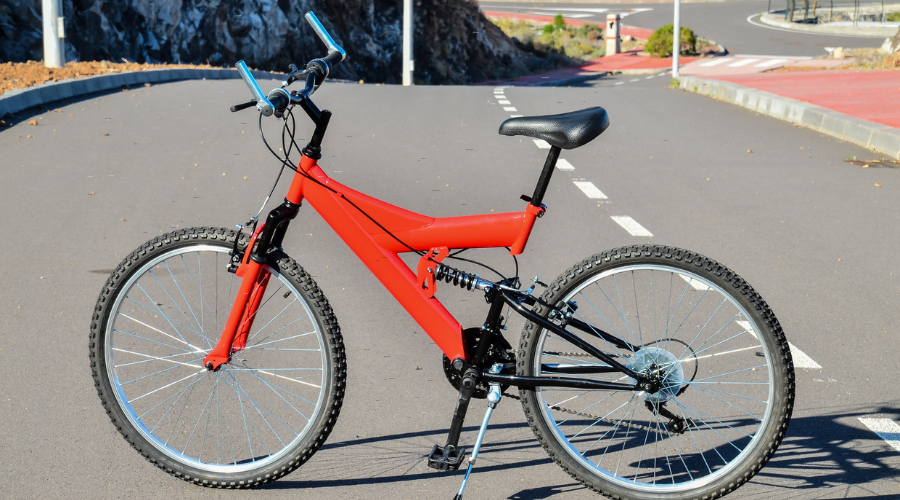
A hardtail is a bike with just the front fork . A full suspension bike has a rear shock . Hardtails are lighter, cheaper and easier to maintain, and a good one can be had for less than $700. Full suspension gives you more grip and comfort on rough terrains. Entry models begin at around $1,800. Under $1500, a good hardtail is usually better than a weak full-suspension ride.
The hardtail also benefits from the maintenance. No pivot bearings to change, no linkage to replace, and no rear shock! This will save money each year. The bearings on a full-suspension bike should be replaced annually or every two years. This is easier to ride and therefore favored by riders who prefer to ride more but wrench less. Weight follows a similar trend, with hardtails 1–2 kg lighter.
Travel is the distance the suspension travels in mm (millimeters). Cross-country bikes are between 100 and 120mm. Trail bikes sit at 130 to 150mm. Enduro bikes are 160 to 180mm. Downhill bikes go up to 200mm. The more you travel, the bigger the hits. They're also heavy, and the bike is slow when climbing. The majority of riders who buy this bike are in the trail category.
Match the fork with the frame. This bike was designed for a 140mm fork; do not use a 170mm fork. This changes the specifications and may void the warranty. Before upgrading, check the maximum fork length of the frame. Their travel should be close together, at the front and rear, typically about 10-20mm. It is unacceptable for bikes to break this rule, and they will be ridden oddly.
Air forks are the most popular on the market. They are light and easy to tune with a shock pump. Pressure is based on your body weight. Coil forks use a steel spring. They are more comfortable on small bumps and are 300g to 500g heavier. Air is the best choice for most riders. Check out products from RockShox, Fox, or Manitou for mid-range prices. SR Suntour is a standard part of budget bikes.
Set sag before you ride. Sag is how much the fork drops, typically 20 to 25 percent of front travel. Rear shocks are priced at a 25-30 percent discount. If it doesn't sag enough, then the bike will be harsh. Too much and it wallows. Most brands print the pressure chart on the rear of the fork leg.
The back shock system is only as good as the frame it’s a part of. Different linkage styles have different properties. Some pedal fine. Others are plush but bob under power. Read the actual frame review, not only the shock brand review. A lock-out switch is handy for long climbs. Verify that the shock has adequate tuning options for your weight.
Inquire about warranty and bearings. Some good brands come with a coverage of 5 years or even lifetime. Look for sealed pivot bearings and easily replaceable parts. Standard bottom bracket and headset sizes make repairs easier. Avoid proprietary frames you can only get from one company. Inquire with the shop before purchasing.
Wheel size affects how a bike rolls. 29-inch wheels require less effort on roots and rocks. 27.5-inch wheels are faster and more fun to ride on. Some enduro bikes combine a 29er front with a 27.5 rear, however. Angles closer to 68 degrees will ascend more rapidly.
Tire width changes as well. Trail bikes come in 2.3- to 2.5-inch tires. Broader tires provide more grip and cushioning. They also give some rolling drag. With a tubeless setup, you can run tires at lower pressures of 22-28 psi without pinch flats. A large number of mid-range bicycles come tubeless-ready. Research first before you purchase. Tubeless sealant needs a top-up every few months.
Aluminum frames are the lowest cost option. A carbon bike is 1- 2 kg lighter than an aluminum bike, but costs $1,500 or more. Aluminum also tends to dent; carbon, however, cracks in a hard crash. Aluminum is the better option for most riders on a budget of less than $3,500.
Spend on brakes first. The front has hydraulic disc brakes with 180mm rotors providing solid braking. Avoid mechanical discs on trail bikes. 1x11 or 1x12 drivetrain works fine on gears. Shimano Deore and SRAM SX Eagle are good entry points. It is worth the investment of a dropper post. Setting the seat down on sharp inclines alters your level of confidence.
Always upgrade in proper order. Replacing tires and brake pads is low cost and makes a huge difference on the ride. Do small changes now and big ones later. If the part installed is starting to fail or it is limiting you, the better fork or wheelset is worth the investment. Don't spend money on parts you can't use. The better the frame quality, the longer it lasts.
Yes, this may be the case for rough, steep trails. It provides traction and decreases fatigue. A hardtail is better for fast and economical riding on smooth surfaces.
Price is the key indicator. Under $1,000, buy a hardtail. Full suspension bikes with air forks are at $1,800 - $2,500. From $ 2,500 to $ 4,000, you will get better shocks and lighter parts. If the price goes over $5,000, you are charged for carbon and quality suspension coverage. Expect to spend an additional $150-$300 on pedals, a helmet, and a shock pump.
Used bikes stretch the budget. A three-year-old bike from an established brand costs 40 to 50 percent less than a new one. Inspect the frame for cracking around welds and pivots. Request the service records on the fork and shock. A bike that has a history record is more secure than a gleaming bike that doesn't.
Fitting is more important than any spec. The sizes of the produced clothes are S, M, L, and XL, although the label doesn't specify the size. Instead, use the reach number. To see how stretched out you are, reach. Two riders of identical height may choose to ride to different heights. If possible, test ride. 10 min. in the parking lot is more info than 1 hour of reading.
Suspension should be serviced regularly. Fork lowers need a basic service about every 50 hours of riding. The entire rebuild takes approximately 200 hours. Rear shocks have a similar timing. The cost of a shop's fork service ranges from $80 to $150 per service. Avoid it, or the seals will wear. Include this cost in the initial budget.
A trail hardtail with a 120 to 130mm air fork. It is less expensive, requires less maintenance, and is a good choice. Maintain full suspension when riding over more difficult trails.
The best suspension bike is the one that fits you, the trails and your budget. Ground first. Select the correct travel. Buy aluminum unless you can afford to throw money away. Test ride before you buy. Keep the service up . A good bike will feel better every time you take it out .
Who is a bulk supplier of suspension bikes for retail stores?
Bicycle manufacturers have a license agreement with them for bulk orders, usually from 20 units to 50 units per model.
What is the total cost of a wholesale suspension bike?
Starting with entry-level hardtails, wholesale prices are generally $250 and go up to $1,800 for mid-range full-suspension models.
Who is a private label supplier of suspension bike?
The OEM factories can provide custom frames, paint, and decals starting from 100 units.
Who offers bulk suspension bikes with customization at discounted rates?
OEM Suppliers offer 10% to 15% off orders for more than 200 units of custom branding.
How often should I service bike suspension?
Once every 50 hours for a basic service and approximately every 200 hours for a full rebuild.
Highlights -Terrain should guide all decisions. -Hardtails cost less. Full suspension grips better....
READ FULLPeople around the world are facing rising fuel prices, which is forcing them to choose electric vehicles. What if the...
READ FULLHighlights The first step in checking a supplier’s quality control is to determine the frame welds, f...
READ FULL