The global full suspension mountain bikes market reached USD 4.5 billion in 2023 and is forecasted to rise at a CAGR of 6.8%, reaching around USD 8.0 billion by 2032. Meanwhile, the US mountain bike market alone is expected to grow from USD 2,321.7 million in 2024 to USD 5,456.1 million by 2035, at a CAGR of 8.08%. This is not a niche trend. There is a structural shift happening in bicycle consumer demand, and more and more people are preferring full suspension bikes. Outdoor sports bike wholesalers who capitalize on it now will be the ones stocking the right inventory when seasonal demand peaks.
So what exactly makes a full suspension mountain bike so effective on rough terrain? And more importantly, what does that mean for how you position these bikes to your retail partners? Let us walk through it.
Before you make the full suspension mountain bike a part of your product lineup you need to explain the difference clearly and in plain language so that your retail partners can convince the buyer standing on the shop floor.
A rigid-rear mountain bike has a suspension fork up front. That is it. The rear of the frame is rigid. It transmits every shock and vibration directly into the rider's body. For smooth singletrack or cross-country racing, that rigidity can actually be an advantage. Less moving parts, lighter weight, more efficient power transfer on climbs.
A full suspension mountain bike include a rear suspension to the design. The full-suspension system, which includes both front and rear suspension, absorbs shock and provides better handling. This makes the bike well-suited for challenging trails. That rear shock is what redefines ride quality. It is what turns a punishing descent into a controlled, confident ride.
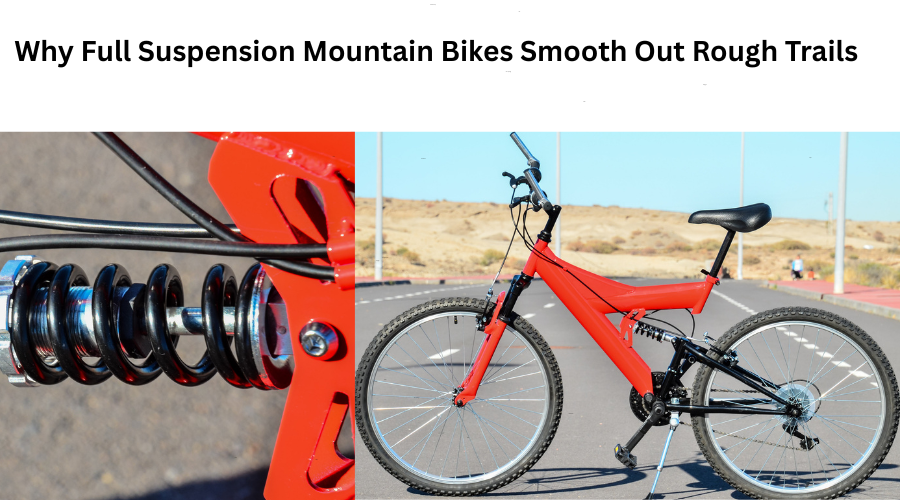
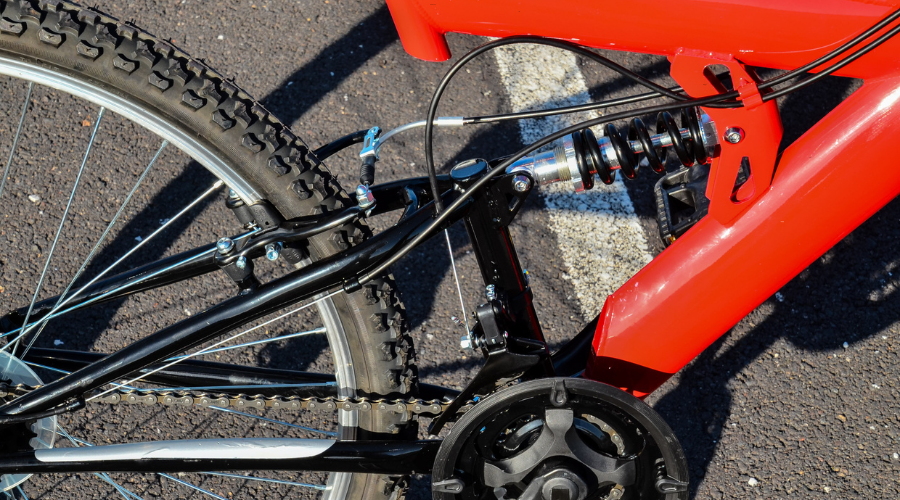
The mountain bike suspension system in a full suspension setup consists of following components: front fork, a rear shock absorber, and a joint mechanism connecting the rear triangle to the main frame. The linkage design determines how the suspension behaves under pedaling load versus ground impact. Different brands use different linkage architectures, but the principle is the same: let the rear wheel move independently so the frame does not have to absorb every hit.
Constant improvements in mountain bike engineering have revolutionized bike performance capabilities, and advanced full suspension offer exceptional comfort and handling over rough terrain.
Understanding the mechanics helps you have a smarter conversation with your retail buyers. You do not need to get deep into the physics. But you do need to understand what actually happens when a full suspension MTB hits rough ground.
When a wheel strikes an obstacle, one of two things happens. Either the suspension absorbs it, or the rider does. On a hardtail, the rear wheel bounces off obstacles rather than tracking over them. That bouncing means the tire loses contact with the ground. No contact means no grip. No grip means less control, especially on loose, rocky, or rooted terrain.
On a full suspension mountain bike, the rear shock allows the wheel to follow the trail surface instead of deflecting off it. Mountain bike suspension systems comprising front forks and rear shocks are essential for absorbing shocks from rough terrain. The result is better riding safety, and rider performance. The wheel stays on the ground. The tire keeps its grip. The rider keeps their composure.
Suspension travel is another factor that you need to understand. Short-travel full suspension mountain bikes (100mm to 130mm of rear travel) are designed for trail riding and all-day efficiency. Long-travel bikes (140mm to 170mm) are built for enduro and aggressive all-mountain riding where descents are steeper and more technical. Progressive suspension systems with various adjustment settings provide customization options to cater to a wide range of trails and riding styles.
The shape and geometry of the frame also affects the stability of the bike.. A lower head angle combined with longer suspension travel pushes the front wheel further out, which stabilizes the bike at speed. Together, geometry and suspension create a system that inspires confidence on terrain that would otherwise send a rider into survival mode.
Your retail partners sell to riders. Those riders care about one thing above technical specs: how the bike feels to ride. Here is how the performance advantages of full suspension mountain bikes appeal emotionally to a rider.
Rough terrain is exhausting when your body is absorbing every impact. The rear suspension takes that load off the rider's arms, shoulders, and lower back. A rider on a full suspension MTB can stay on the bike longer, cover more trail, and finish a ride feeling like a rider rather than a punching bag. That kind of experience brings customers back to the shop.
Full suspension offers a smoother ride and better handling, especially on technical, rocky, or downhill routes, leading to its widespread adoption in the mountain biking community. When your retail partner's customer is picking between two bikes, this is the difference you want them to feel on a demo ride. The best mountain bikes for rough trails are the ones that keep the rider in control when the ground stops cooperating.
This one converts hesitant buyers into loyal customers. Modern trail bikes are calm and competent that they could have easily passed as mini-enduros, combining excellent descending qualities with an enjoyable ride quality and delivering maximum fun on the trail. A rider who feels safe going downhill will ride more often, push harder, and upgrade sooner. That lifecycle value is something your retail partners should understand.
Trail, enduro, all-mountain. These are the three fastest-growing bike categories, and the full-suspension segment led the market in 2024, since a large part of the enduro and trail buyers switched to the adoption of mountain bikes. Stocking depth across these categories is a smart move right now.
Knowing the product is one thing. Knowing how to stock it strategically is another. Here is what you should be evaluating before you place your next purchase order.
Entry-level full suspension mountain bikes typically sit in the USD 1,500 to USD 2,500 range. Mid-range models run from USD 2,500 to USD 5,000. Performance builds go well beyond that. Full-suspension bikes are often associated with higher average selling prices, and the rise in consumer willingness to pay for premium, high-performance gear has been the biggest factor behind their value-driven growth. That higher ASP is good news for your margin per unit. It is also the reason you need retail partners who can properly demo and sell into that price bracket.
The performance of a suspension system depends on design features and quality of components. When assessing a full suspension MTB for your catalog, look at suspension travel, the quality of the fork and rear shock brands, frame material, and linkage design. Full-suspension mountain bikes are also evolving with the implementation of high-performance materials like carbon fiber and lightweight alloys, offering riders improved speed and durability. Aluminum remains the most practical and accessible option across your mid-range tier, while carbon fiber builds carry premium positioning that drives value at the top end.
A bike shop near a trail network with enduro-style terrain needs a different depth than one serving recreational riders on groomed paths. Before committing to volume, talk to your retail partners about who is actually walking in the door. The trail segment is the fastest-growing, appealing to recreational riders seeking adventure and exploration. If your partners serve that trail rider demographic, full suspension MTBs with 120mm to 140mm of rear travel are where you want depth in your catalog.
Suspension component brands like Fox, RockShox, and SR Suntour are shorthand for quality at different price points. As mountain biking continues to expand, the market for high-quality suspension forks and rear shocks is experiencing stronger traction, and leading companies have announced plans to accelerate innovation and expand their mountain bike suspension divisions. Knowing which suspension brands your retail partners trust, and which ones their customers recognize, will help you narrow your sourcing decisions.
Let us be direct. The window to get ahead of this demand curve is open, but it will not stay open indefinitely.
The global mountain bike market size reached USD 9.8 billion in 2024 and is expected to maintain steady growth at a CAGR of 7.2% from 2025 to 2033, propelling the total value to USD 18.5 billion by 2033. That kind of sustained growth across a decade does not happen by accident. It is driven by trail infrastructure investment, rising health consciousness, and a consumer base that is actively seeking performance equipment.
The US mountain bike market is witnessing robust growth, accounting for approximately 29% of global share, largely propelled by a 41% increase in demand for full-suspension models. That figure alone should reframe how you are thinking about your catalog mix. If nearly half of US demand growth is being driven by full suspension mountain bikes, your stocking ratios need to reflect that.
Looking beyond the US market, the demand picture is just as good. The asia-pacific marketplace is predicted to grow at 7.5% CAGR during 2024-2032, making it one of the fastest growing regions of the market. And Latin America is also showing encouraging growth,across countries such as Brazil, Chile and Mexico. These are good opportunities to make money for the suppliers of outdoor sports bikes.
Major suspension bike brands are restructuring their distribution to serve growing retail demand more efficiently. That means your retail partners will be expecting better product access and faster fulfillment from their distributors. Getting your outdoor sports bike wholesale sourcing strategy right now positions you to deliver on that expectation.
Full suspension mountain bikes are not a premium novelty any longer. This is a bike category that is leading market value growth, and converting trail riders into repeat customers. Your retail partners know this and heir customers are asking for it.
The question is not whether you should deepen your full suspension MTB inventory. The question is how fast you can do it before the seasonal demand window peaks and your competitors have already filled the shelves.
For that you need to have a serious conversation with your retail partners about their customer demographics and their current sell-through on mountain bike suspension system equipped bikes. Then map your sourcing accordingly across entry, mid-range, and performance tiers. Position your catalog now, and you will not be chasing demand. You will be the one supplying it.
Obesity and heart problems are rising higher than ever before. The cause is obvious, and it is a sedentary lifestyle....
READ FULLHighlights -Terrain should guide all decisions. -Hardtails cost less. Full suspension grips better....
READ FULLPeople around the world are facing rising fuel prices, which is forcing them to choose electric vehicles. What if the...
READ FULL